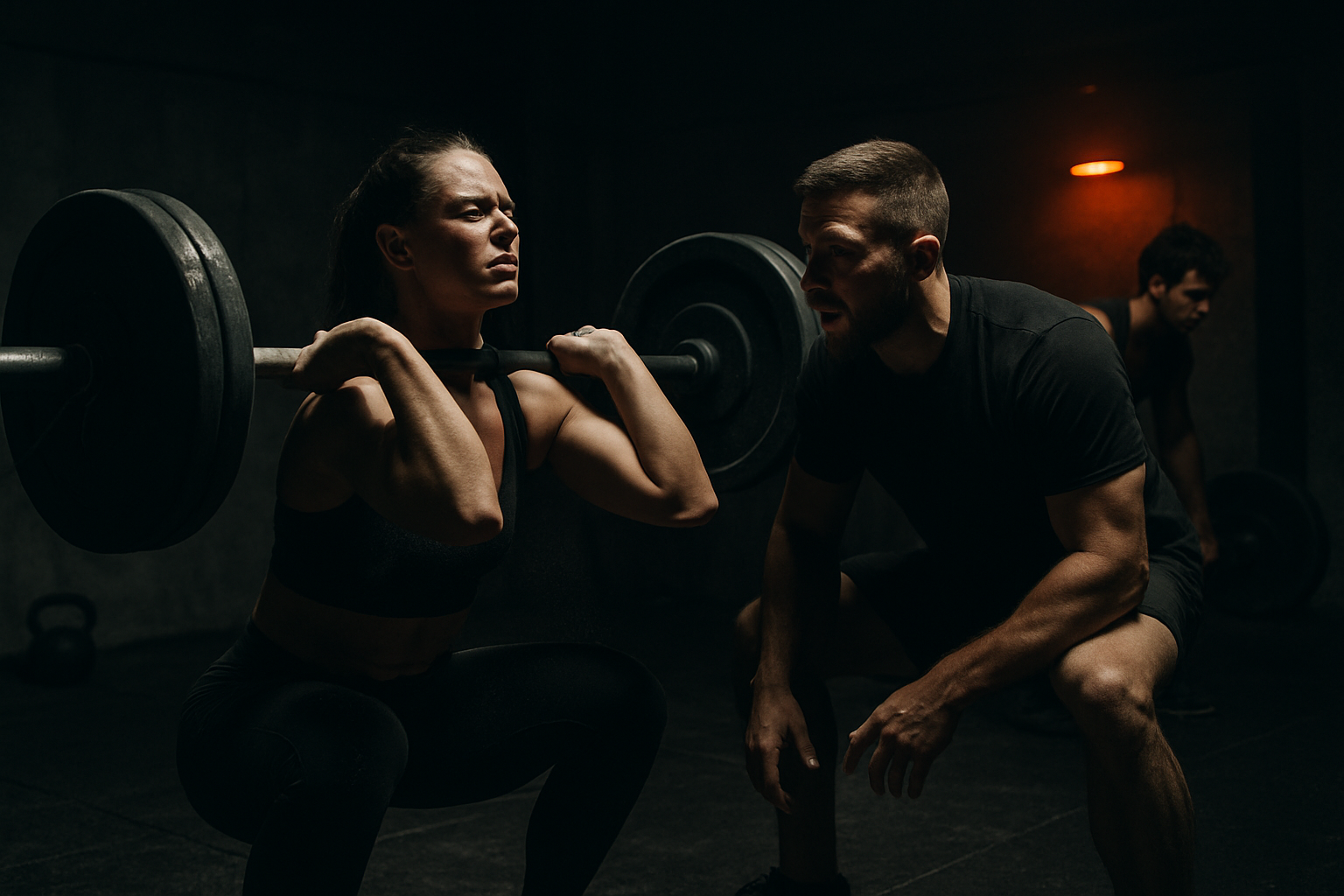
Small group strength coaching puts 2-8 athletes in the same training environment, working under direct coaching supervision toward individual strength goals. It's not personal training. It's not a group fitness class. It sits in the space between — and that space is where real development happens. You get the accountability and technical attention of one-on-one coaching without paying one-on-one prices. You get the competitive energy of training alongside others without getting lost in a crowd of thirty people following a screen. The model works because strength is built through progressive overload, sound mechanics, and consistent effort — all three of which require a coach who actually watches you lift. Most people training alone plateau because nobody's correcting their squat, nobody's pushing their percentages, and nobody notices when they stop showing up. Small group strength coaching solves all of that. It's structured, it's coached, and it produces results that solo training rarely delivers.
What Is Small Group Strength Coaching?
Small group strength coaching is structured, coach-led strength training delivered to a limited number of people — typically two to six — within a shared session. It's not a fitness class. It's not personal training split between strangers. It sits deliberately between the two, combining individualized programming with the energy and accountability that comes from training alongside others who are chasing the same thing.
The scope is specific. A qualified coach designs and oversees strength-focused programming — think barbell lifts, loaded movements, progressive overload — while managing the group as a unit and each athlete as an individual. Technique gets corrected. Loads get adjusted. Progress gets tracked. Nobody just shows up and follows along blindly.
Context matters here. Small group strength coaching exists because most people can't justify the cost of daily one-on-one coaching, but they also don't get what they need from a crowded gym floor or a generic group fitness format. This model solves that. The coach's attention isn't spread across thirty people. It's locked in on a handful, which means the coaching actually lands.
You'll find this model in private strength facilities, performance gyms, and dedicated coaching programs built around real results — powerlifting, athletic development, general strength, body composition. The setting varies. The standard doesn't.
What makes it work is the combination: real coaching, real programming, and real people pushing in the same direction. That environment produces results that solo training rarely does and that large-format classes simply can't replicate.
Key Benefits of Small Group Strength Coaching
Most people training alone are leaving results on the table. Small group strength coaching fixes that — without the price tag of one-on-one personal training or the anonymity of a crowded gym floor.
Here's what you actually get.
Expert programming built for you. A qualified coach designs the work. You're not guessing at sets, reps, or load progressions. Every session has a purpose, and that purpose compounds over time. That's how real strength is built.
Accountability that's hard to fake. When the same four or five people show up at 6 AM expecting you to be there, skipping becomes a choice you have to own. That social pressure isn't a gimmick — it's one of the most powerful drivers of consistency that exists.
Coaching eyes on your movement. Form breaks down under fatigue. It breaks down even more when nobody's watching. In a small group, a coach can actually see you — catch a caving knee on a squat, a bar path drifting on a press, a hip hike on a deadlift. Those corrections prevent injuries and unlock heavier lifts.
Competitive energy without ego. Training alongside people at similar levels pushes you to work harder than you would alone. It's not about beating anyone. It's about the room raising the standard for what effort looks like.
Cost that makes sense. Quality coaching is expensive one-on-one. Small group training cuts the cost significantly while keeping the coaching quality high. You get structured, professional guidance at a fraction of the price — and that makes it sustainable long-term.
Small group strength coaching works because it combines structure, accountability, and skilled instruction in one environment. It's not a compromise between personal training and group fitness. It's better than both.
How Small Group Strength Coaching Works
Small group strength coaching puts you inside a structured training environment with a small number of athletes — typically two to six people — under direct coach supervision. It's not a class. It's not a gym floor free-for-all. It's programmed, coached, and built to produce real results.
Here's how it actually runs.
You start with an assessment. A good coach needs to know where you are before they can move you forward. Movement quality, strength baselines, injury history — all of it gets evaluated. This shapes your programming from day one.
From there, you train inside a shared program with individual adjustments. Everyone in the group might be working the same movement pattern — a deadlift, a press, a squat variation — but loads, range of motion, and cues get modified per person. That's the difference between group training and just showing up to lift next to strangers.
Sessions follow a clear structure. A focused warm-up, a primary strength block, and accessory work targeting weaknesses or building muscle. Nothing random. Every session connects to the next. Progress is tracked, loads are adjusted, and the program evolves as you get stronger.
The coach watches. That's non-negotiable. They're not behind a desk. They're on the floor correcting technique, pushing you when you're holding back, and pulling back when you're about to do something stupid. Real-time feedback accelerates development in ways that self-directed training simply can't match.
The group dynamic matters more than most people expect. Training alongside others who are working hard raises your effort level. You show up differently when accountability is built into the environment.
Small group strength coaching works because it combines the precision of personal training with the energy of a competitive environment — at a price point that makes consistent, high-quality coaching accessible.
Common Questions About Small Group Strength Coaching
How many people are in a small group? Most small group strength coaching sessions run between 3 and 8 people. Small enough that your coach actually knows your name, your weak points, and your goals. Not a class. Not a crowd.
Is it as effective as one-on-one training? For most people? Yes. You still get coached form, progressive programming, and accountability. The difference is you're also training alongside others who push the standard higher. That competitive energy is real and it works.
Do I need experience to start? No. A good coach builds the session around the group's actual ability levels. Beginners get scaled movements. More experienced lifters get loaded appropriately. Nobody gets left behind, and nobody gets babied.
What lifts are typically included? Expect the basics done well — squats, deadlifts, presses, rows, carries. Small group strength coaching isn't about trendy movements. It's about building a body that performs.
How often should I train? Two to four sessions per week is the standard recommendation. Enough frequency to drive real adaptation. Enough recovery to avoid grinding yourself into the ground.
Is it cheaper than personal training? Significantly. You split the coach's time across the group, which drops the cost without sacrificing quality. Most people find it's the best return on their training investment.
What results should I expect? Stronger lifts. Better movement. More muscle. Less body fat over time. The timeline depends on your effort, your consistency, and how seriously you take the programming. Show up and do the work.
Conclusion
Small group strength coaching works. Not because it's trendy or convenient—but because it combines real programming, real accountability, and real community in a format that actually fits your life.
Here's what matters: you get coached movement, not just supervised workouts. You train alongside people who push you without outpacing you. And you build consistency because showing up stops feeling optional when others are counting on you.
The results speak for themselves—strength gains, better body composition, and a training habit that sticks.
If you've been grinding through solo sessions that go nowhere, or paying for a gym membership you barely use, it's time to make a smarter move. Find a small group strength coaching program run by a qualified coach, show up ready to work, and give it 90 days.
Stop waiting for the perfect moment. The weight doesn't care. Get under it.